

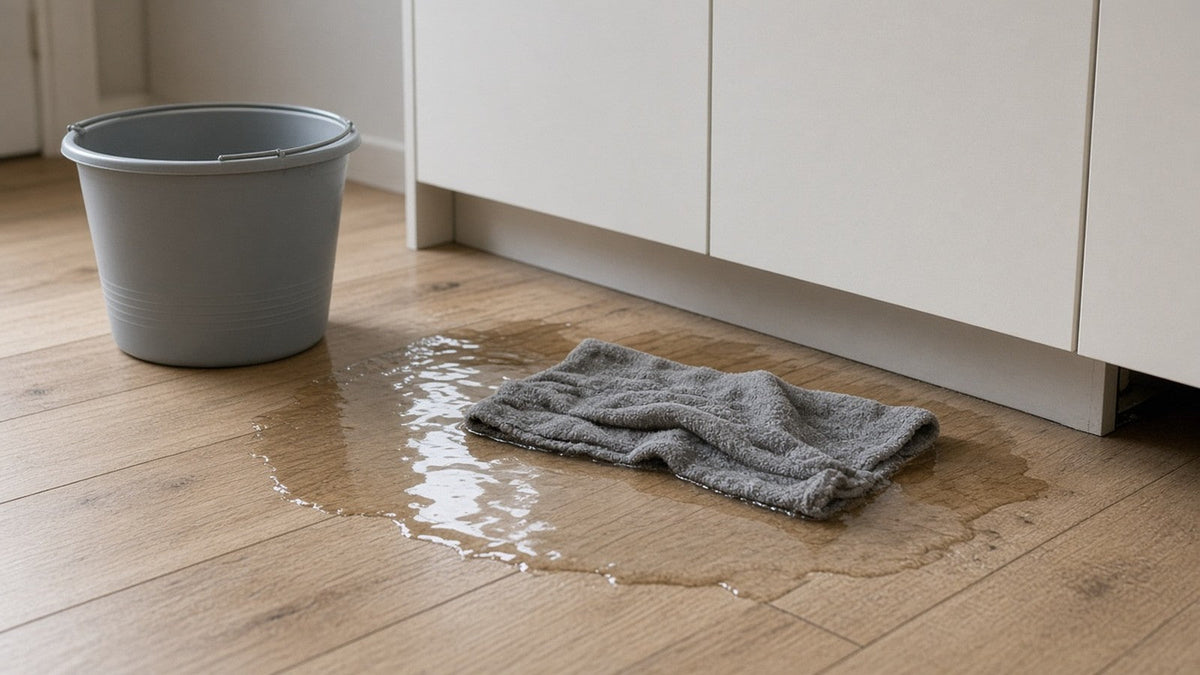
A leak or burst can feel chaotic in the first minutes: water is moving, you may not know where from, and you have to think about the house, the people in it and, later, the insurer. This guide covers what to do in the first hour, how to record what happened, and when to call in help. It is not legal or insurance advice. What your policy covers is in your documents; if you are unsure, ask your insurer.
First: stay safe and stop the water
Do not take unnecessary risks. If water is near sockets, a consumer unit or live appliances, switch off the affected circuit at the fuse box if you can do it safely. Do not walk through standing water if electricity may be involved.
Then stop the supply. The stopcock is often under the kitchen sink, in a utility cupboard, a cellar or near the meter. Close it and check that the flow actually stops. If you can see the failing part — a hose, an isolation valve, an appliance — close the local valve as well.
Once the water has stopped, give it somewhere to go: a shower drain, a floor gully, a bath you can bail into. Towels and a wet vacuum help with standing water. The aim of the first minutes is not a renovation. It is: no more incoming water, as little spread as possible, no electrical danger.
Then: record the scene before you throw things away
Photograph while the damage is still visible: the source if you know it, the room from several angles, skirting, the underside of furniture, the meter reading, the closed stopcock. Note the time and what you have already done. Keep damaged small items until the insurer says you may dispose of them.
Notify the insurer promptly, in the way your policy asks. Ask before you commission major drying or demolition, unless there is immediate danger. Insurers generally expect you to limit the damage, not to open an entire wall without a conversation.
Drying and the next few hours
The sooner organic materials dry, the lower the risk of later problems. Ventilate, and only use heaters or dehumidifiers once it is electrically safe, following advice from specialists or the insurer. Lift furniture off wet floors. Floor build-ups, insulation and cavities dry more slowly than the surface suggests. If water has entered the structure, a professional drying contractor is often better than a hairdryer.
Call a plumber if you cannot find the source, if the stopcock does not stop the flow, or if the pipe itself is damaged. A burst on the supply outside the home may also involve the water company; that depends on where the failure is.
We have a more detailed walk-through in what to do in the first hour after a water leak and a guide to finding a hidden leak. The order stays the same: stop, record, then repair.
If nobody was at home
Many incidents are found late because the house was empty. In that case the “first hour” has already passed when you open the door. That is why preparation matters: know where the stopcock is, use appliance valves when you go away, and have a way to see unusual flow while you are out.
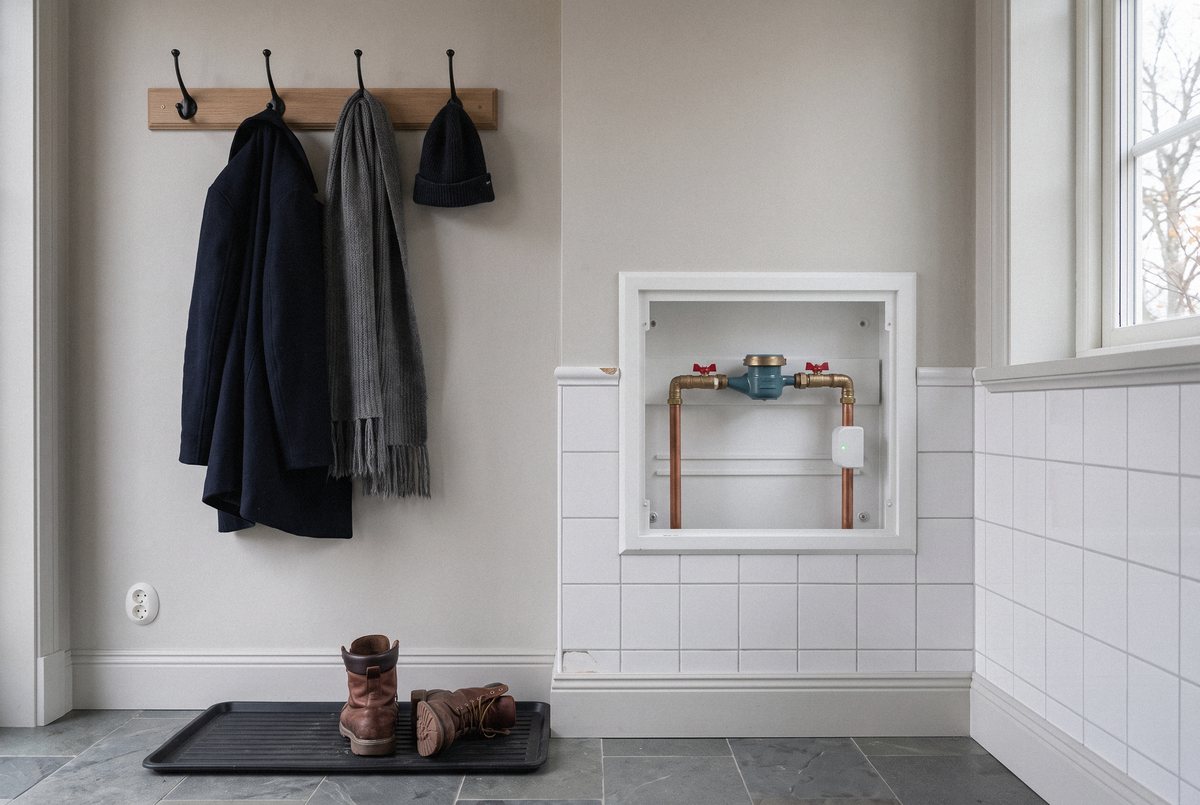
Water Grip is a clamp-on leak detector and water watcher. It typically sits on the incoming pipe, fits 15–28 mm copper and 16–32 mm plastic (PEX) or multi-layered (PAL) pipe, and can be fitted without a plumber. It measures flow and temperature, alerts you in the app to unusual flow and warns at 4°C on the pipe it is mounted on. It does not shut the water off; after the alert you close the stopcock, or ask someone else to. For automatic shut-off you need a valve, professionally fitted.
Water Grip ships to the EU, the UK, Norway, Iceland and Switzerland, with free shipping within Sweden.
The next leak is easier to catch if someone is told
Water Grip clamps onto the incoming pipe, so you can fit it yourself. It tracks usage and sends leak alerts in the app, even when nobody is at home.
FAQ
What should I do first after a leak?
Check for electrical danger and switch off the circuit if needed, then close the stopcock. After that, remove standing water and photograph the scene before you throw anything away.
Should I call the insurer immediately?
Notify them as early as your policy requires, usually once the situation is under control. Agree larger works before you commission them, unless there is immediate danger.
Can I tear out wet materials myself?
You can often secure and photograph small, loose items. Do not open structural or large areas without agreement or a specialist, except to remove immediate danger. If unsure, ask the insurer.
Will a leak detector prevent every incident?
No. A watcher on the inlet shortens the time until you, or someone else, can act. It does not replace waterproofing or a shut-off valve, and Water Grip does not close the water itself.
Be notified the next time water starts flowing when it should not
A clamp-on Water Grip needs no plumber. Leak alerts and usage tracking live in the app.

Leave a comment
This site is protected by hCaptcha and the hCaptcha Privacy Policy and Terms of Service apply.