

A water leak is bad news in any house. But when you live there, you catch it quickly. You hear the drip, spot the stain on the ceiling or step in a puddle by the washing machine. In a house nobody visits, none of that happens. The leak simply runs until someone opens the door, and that might be weeks or months later.
This guide covers why empty homes are the worst case, the leaks that cause most of the damage, the routine worth following before you leave, why turning the water off is not always the full answer, and what remote monitoring adds. It applies equally to a holiday home, a second home, a rental property between tenants, or your main home while you are away on a long trip.
Why an empty home is the worst case
Four things combine to make an unoccupied property so vulnerable.
Nobody is there to notice. No sound of running water, no damp smell, no wet floor underfoot. The early warning signs that save a lived-in house are missing.
The heating is usually turned down or off to save money. That leaves pipes sitting close to freezing for long stretches. One cold snap is enough to freeze and split a pipe, and the real flooding often starts when it thaws.
Discovery takes a long time. A leak in a holiday home closed up in October may not be found until spring. Even a slow drip adds up over that period.
The damage keeps growing. Water that sits for weeks soaks into floors, swells timber, spreads mould through plasterboard and can reach the electrics. What would have been a mop and a plumber's visit becomes a full refit.
One more point. Many insurers treat unoccupied homes differently from lived-in ones. Check what your insurance policy says about unoccupied homes before you rely on it, and read the conditions around heating and water.
The classic causes
Most water damage in empty homes comes down to a short list of familiar culprits.
- Frozen pipes. Water expands as it freezes and splits copper and plastic alike. Pipes in lofts, garages and outside walls are the most exposed.
- Old hoses to the washing machine or dishwasher. Rubber hoses harden and crack with age, and they are under mains pressure all the time, even when the machine is off.
- The toilet cistern. A stuck float valve or a worn washer can leave water running continuously. It is quiet enough to miss, and in an empty house nobody is listening anyway.
- The water heater or hot water cylinder. Tanks corrode from the inside and start weeping at the base, often in a cupboard nobody looks in.
- Pipe joints and fittings. Every joint is a potential leak. Repeated temperature swings in an unheated building cause fittings to move and loosen over time.
A simple routine before you leave
Most of the protection comes from habit. Run through a checklist every time you leave the property for more than a few days.
- Turn off the water at the main stopcock if you can. This is the single most effective step.
- Open a tap afterwards to release the pressure in the pipes.
- Drain and isolate outdoor taps, and disconnect the garden hose.
- Set the heating to a minimum temperature that keeps the pipes above freezing rather than switching it off completely.
- Leave the doors of cupboards under sinks open so warm air reaches the pipework.
- Ask a neighbour, friend or caretaker to look in regularly. A walk around the building and a listen at the door makes a difference.
- Take a photo of the water meter reading before you go. If the number has moved when you return, water has been used while you were away.
- If the property is let, add a stopcock check to the changeover routine between tenants.
Why turning the water off is not always enough
Shutting off the mains sounds simple. In practice it is not always possible, and it does not cover everything.
Some systems need water. A wet central heating system with an automatic filler, a heat pump, or a property on a private well with its own pump may all need the supply to stay live. If you let the house out, you cannot turn the water off between every booking.
People forget. You leave on a dark Sunday evening, the car is packed, and the stopcock slips your mind. Or the last person out did not know where it was. It happens to everyone.
And even with the water off, the freeze risk remains. Water already standing in the pipes can still freeze. The heating has to keep working, and if the boiler trips during a cold week in January, nobody is there to notice. That silent failure is often what leads to a burst pipe in the first place.
This is where it helps to have something that keeps watch when you cannot.
What remote monitoring gives you
A holiday home leak detector can mean anything from a small alarm on the floor that beeps when it gets wet, to a monitor fitted on the mains water pipe that sees every litre entering the building. The difference matters. A floor sensor only reacts once water is already on the floor, and then someone still has to be there to hear it.
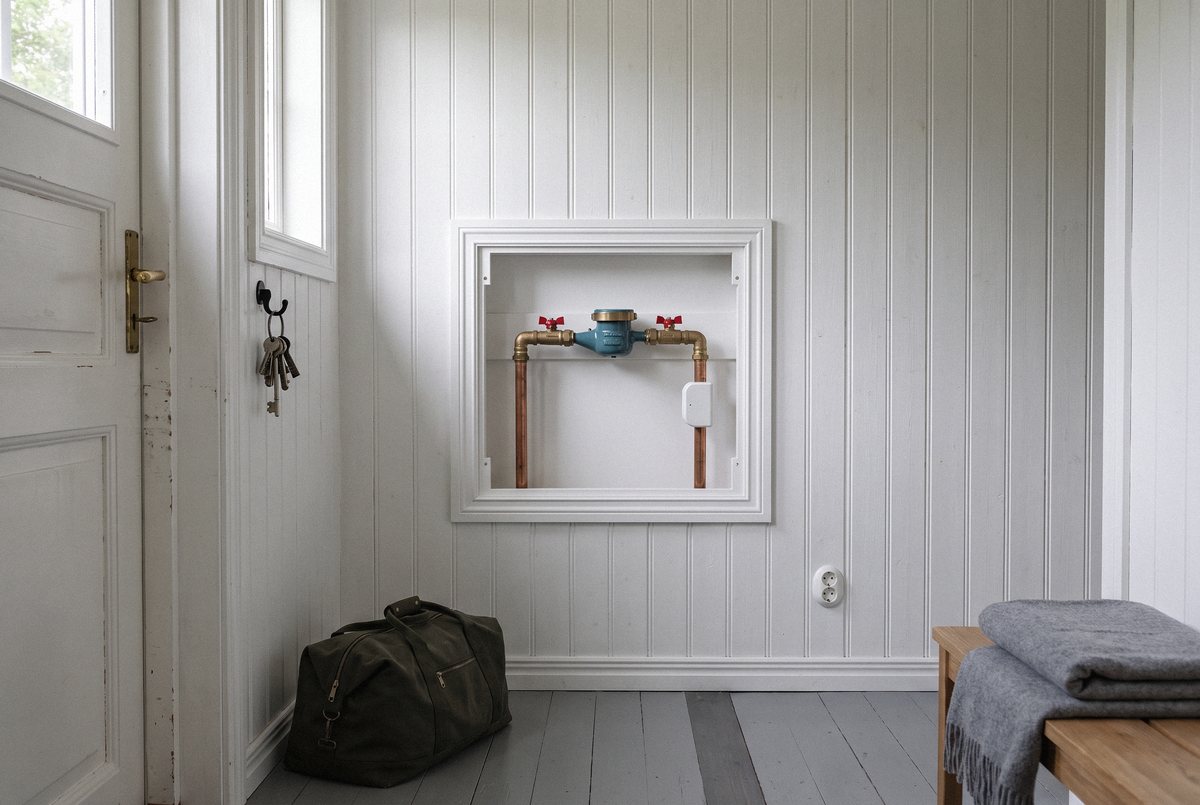
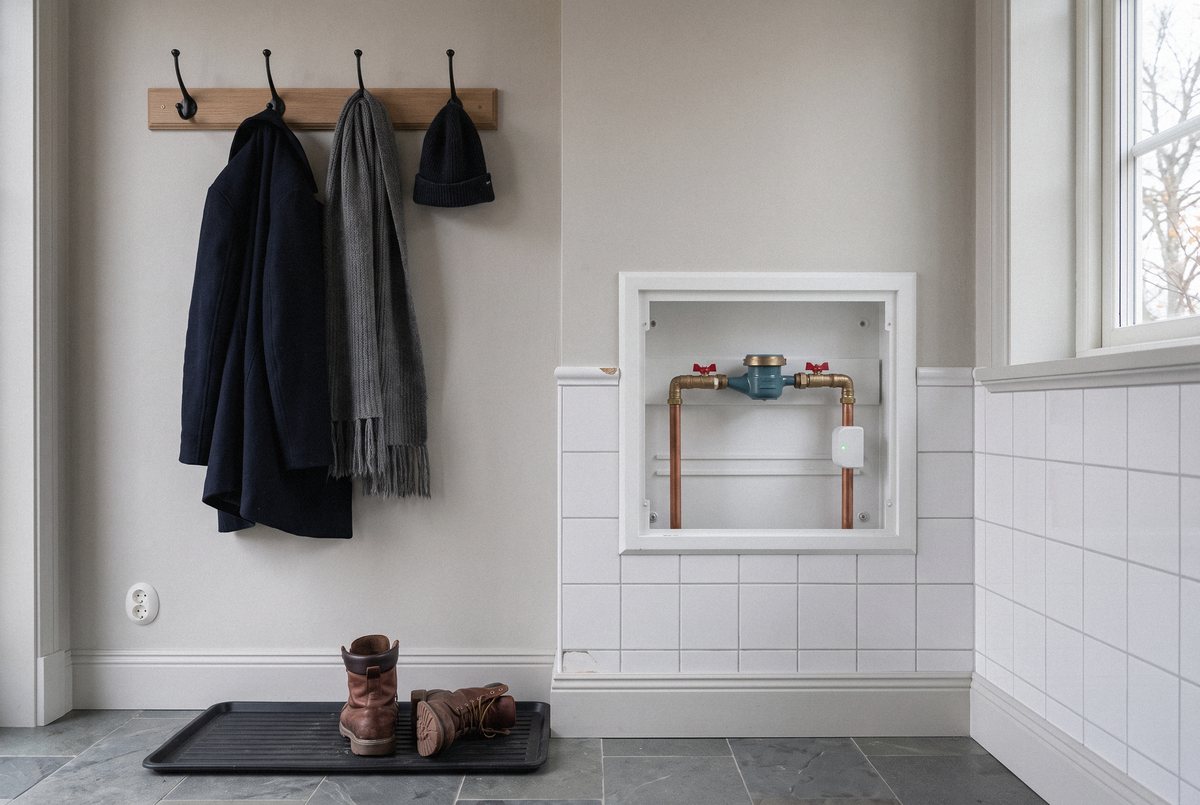
A monitor on the incoming pipe, such as Water Grip, measures water flow continuously. In an empty property there should be no flow at all. If water starts moving anyway, because a pipe has split or a hose has failed, the monitor detects the leak and sends an alarm to the app on your phone. You find out the same day rather than at Easter, so you can call a neighbour or drive over and turn off the stopcock.
Since September 2026, Water Grip also includes a freeze warning. If the temperature at the pipe drops to 4 degrees Celsius, you get an alert. That gives you time to turn the heating up, call a neighbour or drive over before anything actually freezes. In practice it also acts as an early warning that the heating has stopped, which could otherwise go unnoticed for days.
So you get two things: you know the same day, wherever the leak is, and you get advance notice of frost. Someone still has to turn the water off, which is why the stopcock routine and a neighbour with a key still matter. But the biggest worry, not knowing what state the house is in while you are away, goes away.
A short plan for any empty property
Put together, the plan looks like this.
- Replace old washing machine and dishwasher hoses before they fail. They are cheap.
- Check the cistern, the water heater and visible joints once a year.
- Follow the stopcock routine every time you leave.
- Keep the heating on a low setting and make sure it is actually working.
- Add remote monitoring so you are not relying on a neighbour happening to walk past.
A holiday home should be something to look forward to, not something to worry about. With a little preparation and the right technology, you can lock the door in autumn and trust that the house will be dry when you come back.
Read next: Washing machine and dishwasher hoses: the leak most people miss and The most common causes of water damage at home.

Leave a comment
This site is protected by hCaptcha and the hCaptcha Privacy Policy and Terms of Service apply.