

When most people picture a water leak, they picture a burst pipe. Water across the floor, panic, towels and a frantic call to a plumber. It is an unpleasant experience, but it is rarely the most expensive one.
The really expensive water damage is the kind you never see. A slow drip behind the dishwasher. A joint under the floor losing a few drops an hour. A fitting in the wall behind the shower that weeps a little at a time. Leaks like these can run for weeks or months before anyone notices, while moisture spreads through floors, walls and timbers.
So what is the true cost of a water leak? There is no single answer, because the cost is set by how long the water has been allowed to run. Here we look at what actually costs money, the costs that creep in afterwards and how to catch a leak before it becomes expensive.
The direct costs of water damage
The first costs are the ones that arrive as invoices.
The water bill. A pipe leaking around the clock lets out far more water than you would expect. On a water meter, it shows up on your next bill.
Repairing the leak itself. A plumber has to find the leak and fix it. With a visible leak that is often quick. With a hidden leak, finding it can take longer than fixing it, and a floor or wall may have to be opened up to reach it.
Drying out. Moisture that has soaked into concrete, timber joists or insulation does not simply disappear. A restoration company brings in dehumidifiers and air movers that can run for weeks, on your electricity.
Stripping out and rebuilding. This is often the biggest item. Wet flooring has to come up. Damaged plasterboard, skirting and joists have to be replaced. Then everything has to go back in with new flooring, tiles or decoration. If the damp has reached several rooms, the bill grows quickly.
The indirect costs that are easy to forget
Many people only count the trades. But the real water damage cost includes things that never appear on a plumber's invoice.
Your excess. Escape of water is one of the most common home insurance claims in the UK. Even when your insurer covers the damage, you pay the excess first, and many policies set a higher excess for escape of water than for other claims.
A higher premium. A claim goes on your record and can push up your premium at renewal. Several claims in a short period can make cover harder to find.
Time out of the home. If the bathroom or kitchen is out of action while the house dries out, daily life has to be rearranged. In worse cases the family needs alternative accommodation.
Mould. Damp that is left for a long time becomes a breeding ground for mould, and mould can affect the health of the people living in the house.
Lower resale value. A recorded claim will come up when you sell. Even when everything has been put right, buyers can be nervous or try to negotiate the price down.
Why time matters more than the size of the leak
This is the heart of it. A burst pipe spraying water is discovered within minutes. You turn off the stopcock, mop up and call the plumber. The damage is contained.
A small leak dripping in silence has no such alarm. Nobody sees it. Nobody hears it. The water goes straight into the floor or wall and spreads through materials that soak it up. The longer it runs, the wider and deeper the damp goes.
So a leak releasing a fraction of what a burst pipe does can still cost many times more. Not because it leaks more, but because it leaks for longer.
Put simply: a visible leak costs you a plumber. A hidden leak costs you a renovation.
Where hidden leaks usually start
If you know where to look, you have a better chance of spotting trouble early. These are the usual suspects in a typical house.
- Behind and under the dishwasher, where hoses and connections age.
- Under the washing machine and at its isolation valve.
- Around the hot water cylinder or boiler.
- In bathroom floors and walls, where sealant and pipe penetrations can fail over time.
- At the connections to fridges with an ice maker or water dispenser.
- Under suspended floors and in cellars, where pipes are hard to inspect.
- In the loft and along outside walls, where pipes can freeze in winter.
How to catch a water leak early
A few simple habits help you find a leak before it gets expensive.
Check the water meter. If you have one, turn off every tap and make sure no appliances are running. Read the meter, wait an hour and read it again. If the numbers have moved, water is flowing somewhere.
Listen when the house is quiet. A faint hissing in the pipes when nobody is using water can be a leak.
Look and touch. Cold or damp patches on floors and walls, bubbling paint, dark lines along the skirting and a musty smell are all signs.
Look under the appliances. Pull out the dishwasher once a year and check the hoses and the floor. Do the same with the washing machine.
Compare your water bills. A bill that is suddenly higher without any change in habits is worth investigating.
The problem with all of these methods is that they rely on you remembering. A leak that starts the day after your check can run until the next one.
How a flow monitor on the mains water pipe helps
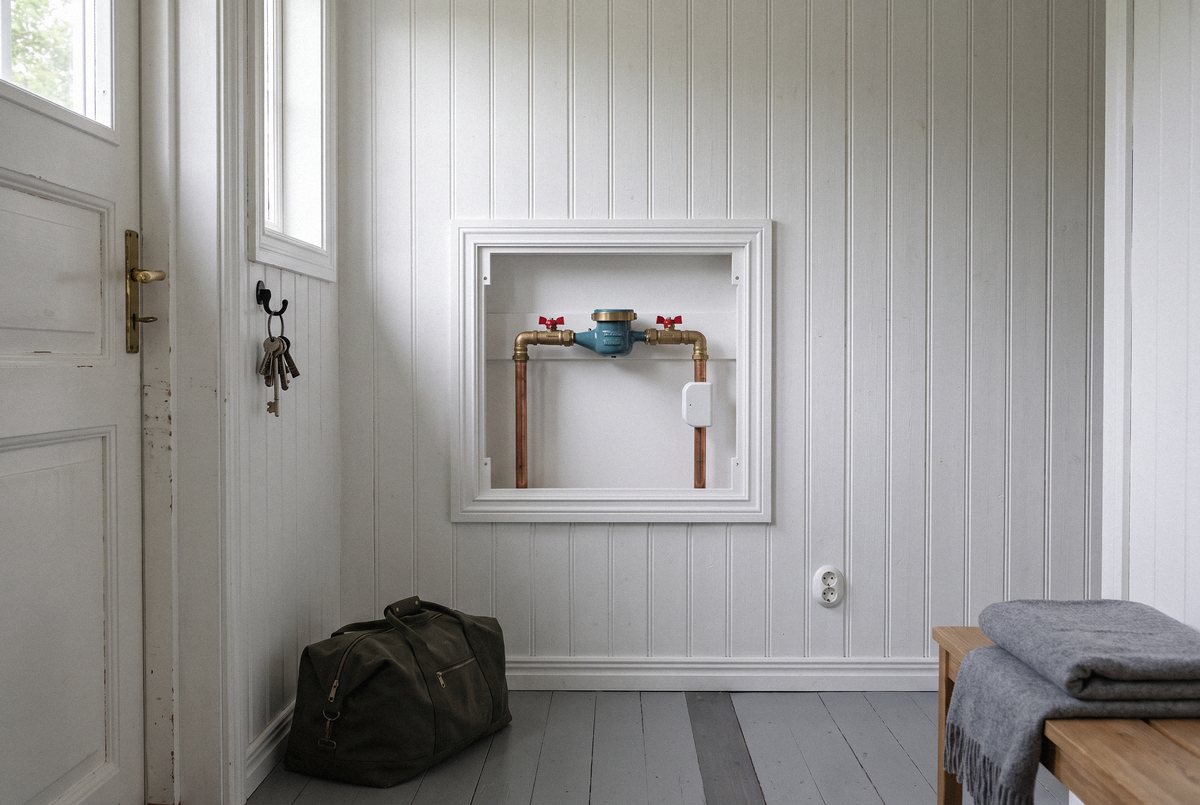
This is where technology helps. A flow-based leak monitor is fitted on the incoming mains water pipe, the point where water enters the house, and measures how much water is passing through, all the time.
It sees every drop that comes into the house, wherever it ends up. A weeping connection behind the dishwasher shows up as a small but constant flow at a time when nobody should be using water.
Water Grip works this way. It is installed on the incoming pipe, measures the flow continuously and alerts you immediately in the app when it detects a leak. That way you can turn off the stopcock straight away, or ask someone to do it if you are away.
Since September 2026 it also has a freeze warning that alerts you at four degrees Celsius. That is useful for holiday homes and cold pipe runs, since frozen pipes are a common cause of serious water damage in winter.
A leak monitor does not mean you will never have a leak. The difference is that it is spotted straight away instead of weeks later, so you can act at once. And as we have seen, time is what decides the cost of a water leak.
In summary
What does a water leak really cost? One that is seen and stopped quickly usually costs a plumber and some inconvenience. One that runs hidden costs drying out, rebuilding, your excess, your time and in the worst case mould and a lower value on your home.
The cheapest thing you can do is shorten the time between a leak starting and anyone noticing. Check the house regularly, learn where hidden leaks tend to start and consider whether a monitor on the mains water pipe is worth it for your home. Once you count everything water damage drags along with it, the answer is often yes.
Read next: How to find a hidden water leak in your home and What to do in the first hour after a water leak.

Laisser un commentaire
Ce site est protégé par hCaptcha, et la Politique de confidentialité et les Conditions de service de hCaptcha s’appliquent.