

"It took hardly any time to fit and I had it connected to the app within minutes. It's really reassuring knowing it'll tell me if it spots a leak before it turns into an expensive problem."
Richard M.Verified purchase · 16 July 2026
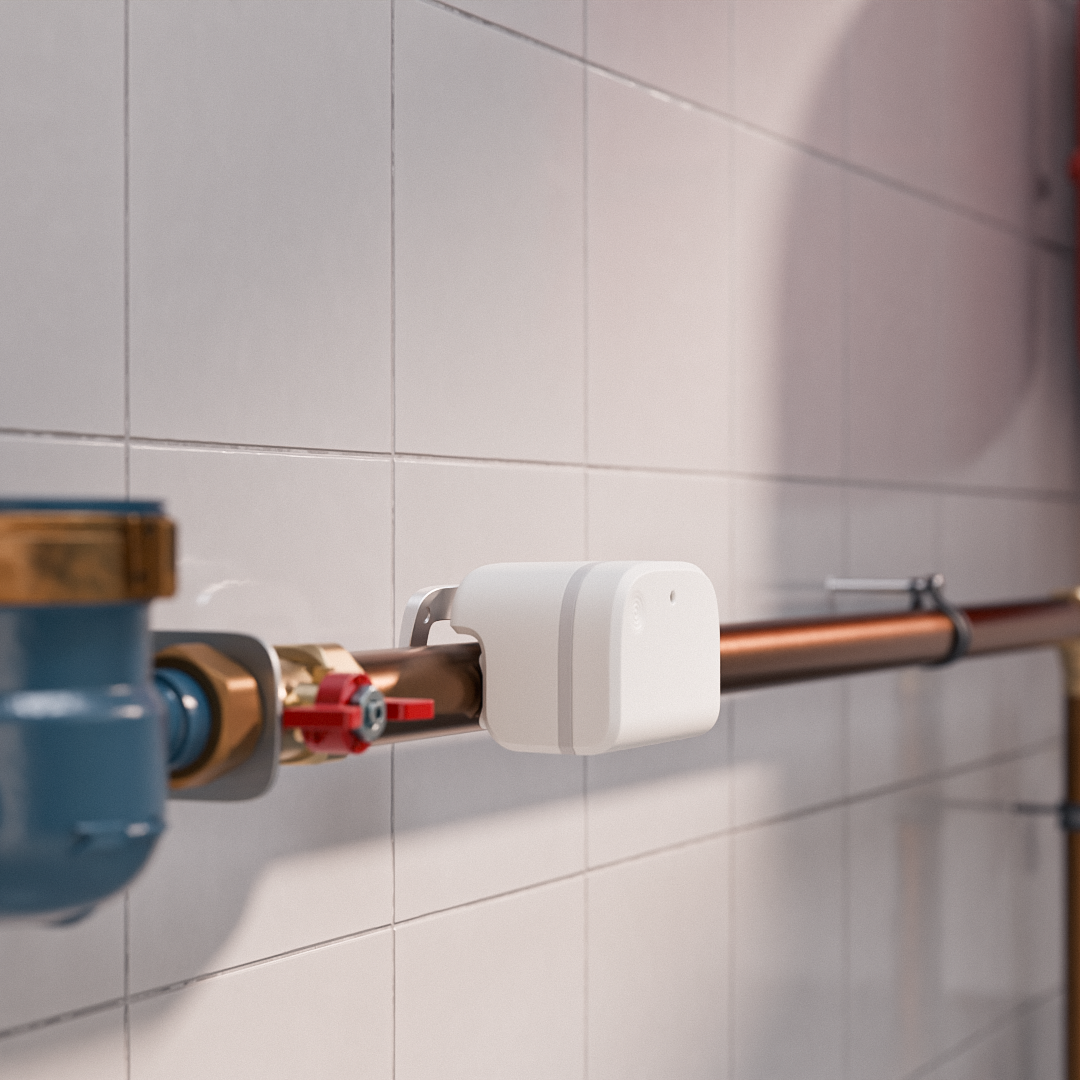
Cold snaps are when British insurers pay out most for burst pipes. Water Grip reads the flow and the temperature of your incoming pipe around the clock, and warns your phone when the pipe is getting cold enough to be at risk.

01
Most of the year, escape of water is a steady drip of claims. In a cold snap it becomes a flood of them. When the Beast from the East hit in early 2018, insurers paid out more for burst pipes in one quarter than ever before, and the number of claims nearly tripled against the quarter before.
It keeps happening. In the December 2022 freeze, Zurich saw 77 % more claims than the December before. In 2023 the average weather-related burst pipe claim came to over £17,000. A pipe at mains pressure can lose up to 400 litres an hour, so the cost is set by how long it runs before anyone knows.
400 litres an hour at mains pressure. A working day is eight of them.
Sources 1 to 4 at the foot of the page.
02
A pipe does not burst the moment it freezes. The temperature falls for hours first, the water inside expands and splits the pipe, and the damage usually shows when it thaws, often while the house is empty. The warning is there the whole time. It is the temperature of the pipe.
Water Grip reads that temperature alongside the flow, around the clock, and warns your phone when the pipe is getting cold enough to be at risk. That is the moment to turn the heating up, open the loft hatch, or turn the stopcock off if you are away. The same monitor then tells you if water starts moving when it should not.
It matters most when nobody is home. Insurers advise leaving the heating on a timer or turning the water off at the stopcock when you go away, and most policies remove escape of water cover altogether once a home has been unoccupied for 30 or 60 days.
Sources 5 and 6 at the foot of the page.
03
Start by finding your stopcock. For most UK homes that is under the kitchen sink, otherwise the downstairs loo, the utility room or under the stairs. Four in ten British adults could not tell you where theirs is, so do this before the weather turns, and show the rest of the household.
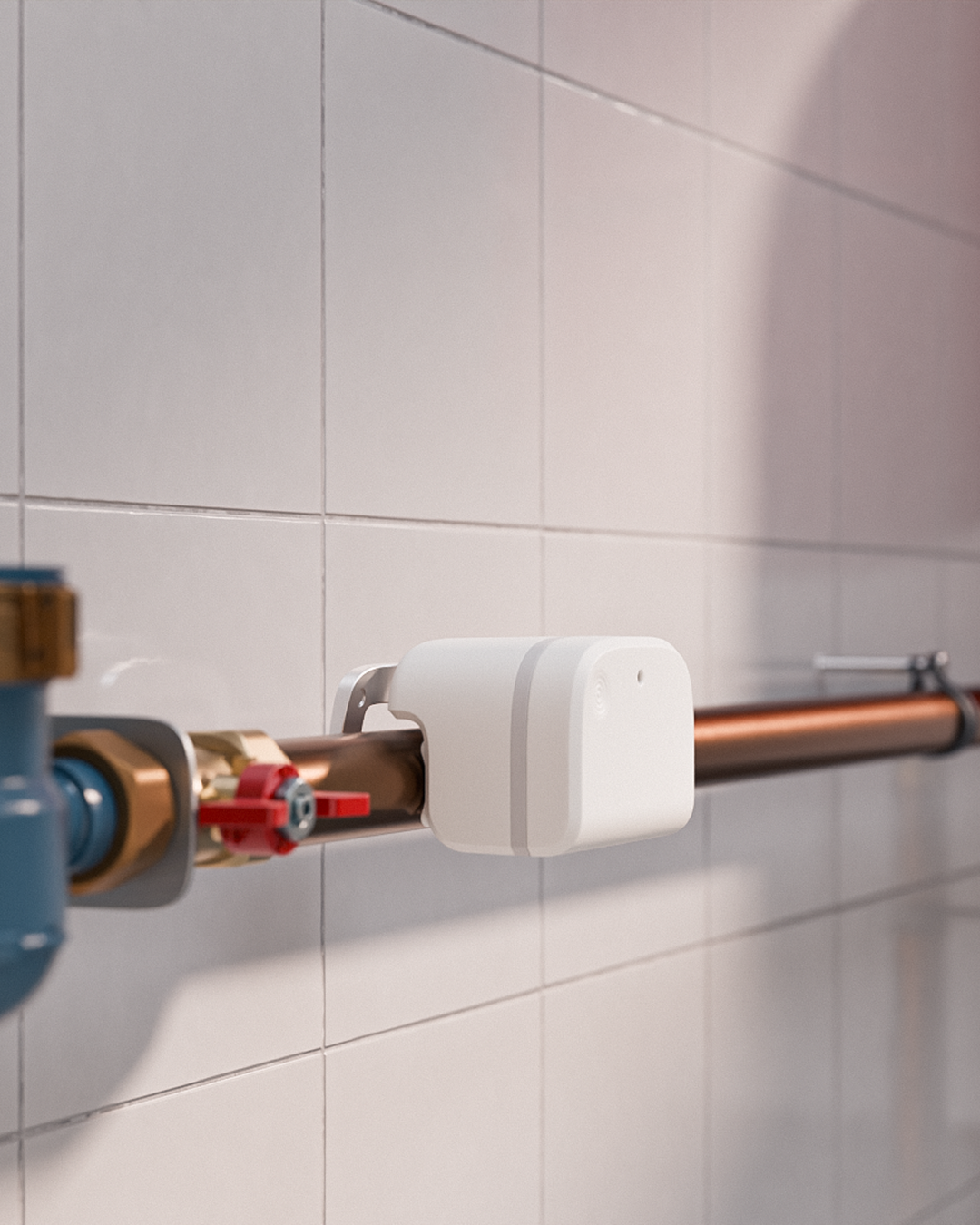
Water Grip clamps onto the outside of the incoming pipe right there. Nothing is cut, drained or soldered, and the Allen key is in the box. It reads the flow with ultrasound and the temperature at the same time, and sends the alert to your phone when either does not add up.
Winter is the season the claims data points at, but escape of water is the claim UK homeowners make most in every month of the year. Fit it now and it works all year round.
Sources 7 to 9 at the foot of the page.
Order Water Grip ↓
Ultrasonic leak monitor for the incoming water pipe. Flow alerts, pipe temperature warning and your water use in the app. Fitted in five minutes.

Developed with one of Sweden's largest insurance companies. Red Dot Design Award 2025.
Step 1 of 3
Under the kitchen sink in most UK homes. Otherwise the downstairs cloakroom, the utility room, the airing cupboard or under the stairs. The incoming pipe runs through it.
Step 2 of 3
On the house side of the stopcock, on a straight run of copper or plastic. Tighten the clamp with the Allen key in the box. The pipe is never opened.
Step 3 of 3
Join your home Wi-Fi in the Quandify app. From then on the monitor reads the flow and the temperature around the clock, and your phone gets the alert.
Price in GBP. Delivery, returns and warranty terms are on the product page.
From the reviews
The same things come up: it took minutes to fit, the app just works, and it is reassuring to know something is watching.
"It took hardly any time to fit and I had it connected to the app within minutes. It's really reassuring knowing it'll tell me if it spots a leak before it turns into an expensive problem."
Richard M.Verified purchase · 16 July 2026
"Great product: simple packaging without plastic, extremely easy to install and now it does what it is supposed to do, monitoring for leaks."
Boy E.Verified purchase · 18 May 2026
"I have been using it for almost 2 weeks now and it is quite accurate, I have integrated it into home assistant and works fine. So far so good."
Mohamed N.Verified purchase · 9 June 2026
Reviews are reproduced word for word and are sourced from Judge.me. Read all reviews
01
A floor puck reacts to water that has already escaped, and only if it reaches the puck. Water Grip reads the flow in the incoming pipe, so a leak inside a wall or under a floor shows up as flow that should not be there.
02
A floor alarm knows nothing until the thaw. Water Grip watches the pipe temperature all winter and warns you while there is still time to turn the heating up or the stopcock off.
03
It clamps onto the outside of the pipe. No plumber, no draining down, no push-fit joints, and you can take it with you when you move.
Where it goes in a UK home
UK domestic plumbing is mostly 15 mm and 22 mm copper, or white and grey plastic push-fit in anything built or re-plumbed in the last twenty years. Water Grip fits copper from 15 to 28 mm and plastic from 16 to 32 mm, so it fits the rising main in almost any house.
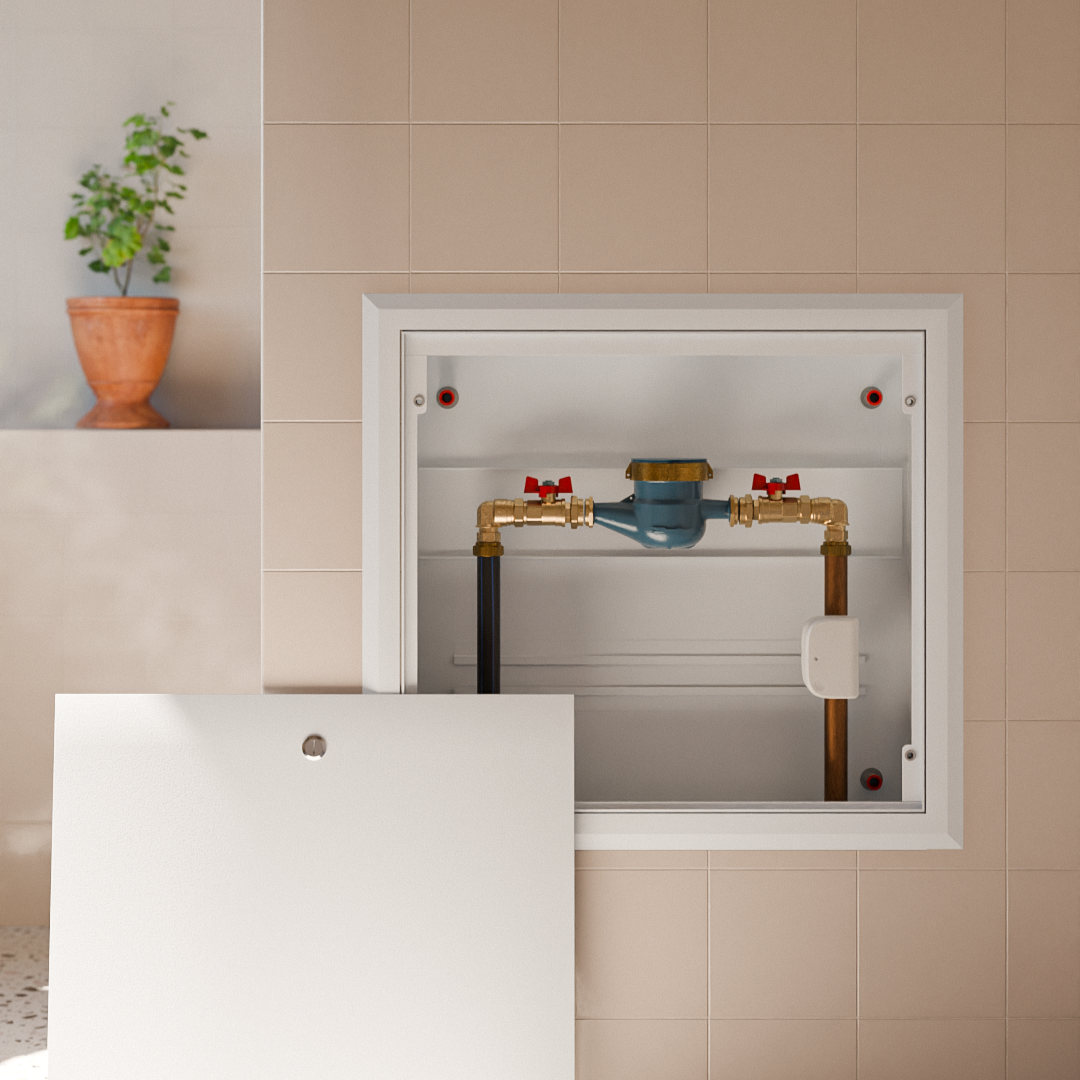
Your water meter may be outside under a lid in the front path, or you may not have one. It makes no difference. Water Grip measures the flow itself, with ultrasound, from the outside of the pipe.

Questions & answers
Water Grip reads the temperature of the incoming pipe alongside the flow. When the pipe is getting cold enough to be at risk of freezing, you get a warning in the app. What you do next is up to you: heating on, loft hatch open, or the stopcock off if the house is empty.
No. Water Grip measures the flow and the temperature and alerts you in the app, so you can act while the leak is still small. If you want the supply closed automatically as well, Quandify makes a separate controller for that, CubicSecure, which is fitted by a plumber.
No. It clamps onto the outside of the pipe with the Allen key in the box, so the pipework is never opened and nothing is drained down. Most people are done in five minutes.
In most UK homes it is in the cupboard under the kitchen sink. If not, try the downstairs cloakroom, the utility room, the airing cupboard or under the stairs, usually where the incoming pipe comes up through the floor. It is a brass tap with a handle on a 15 mm or 22 mm pipe. Your water company also has an outside stop tap under a small lid near the boundary, but Water Grip goes on the inside pipe.
Insurers advise leaving the heating on a low timer or turning the water off at the stopcock, and checking your policy for how long the home may be unoccupied before escape of water cover is removed, commonly 30 or 60 days. With Water Grip fitted you also get a warning on your phone if the pipe temperature drops or water starts moving while you are away.
Usually a sudden escape of water is covered, and most buildings policies include trace and access cover, typically limited to £5,000 to £10,000, for finding the leak and getting to it. Gradual leaks and wear and tear are often excluded, many policies carry a separate higher excess for escape of water, and cover for it is normally removed once a home has been unoccupied for 30 or 60 days. A claim also means weeks or months of drying and rebuilding your own home. Read your policy, and ask your insurer whether a monitored supply changes your terms.
No. Water Grip measures the flow itself using ultrasound through the wall of the pipe. It does not read your meter and does not need one, which is also why it works in the roughly one in three homes that have no meter.
Copper 15 to 28 mm, plastic (PEX) 16 to 32 mm and multi-layer (PAL) 16 to 32 mm. That covers standard UK 15 mm and 22 mm copper and standard plastic push-fit.
USB-C or battery, and 2.4 GHz Wi-Fi to your home router. Alerts arrive as notifications in the Quandify app on your phone.
Water Grip alerts you to abnormal flow and low pipe temperature. It does not turn the water off. Statistics are quoted from the sources above as published and are not a prediction about any individual home.