

Frozen pipes are one of the most common causes of water damage in UK homes during winter. The frustrating part is that the damage usually shows up late. A pipe freezes quietly, splits, and only when the thaw arrives does water start running into a wall, a ceiling or a floor.
The good news is that most of it is preventable. A few simple jobs in late October or November, plus a bit of attention to the cold corners of the house, cut the risk considerably. This guide covers why pipes burst, where they freeze first, how to stop pipes freezing in the first place, and what to do if one freezes or bursts anyway.
Why pipes burst when they freeze
Water is one of the few substances that takes up more space as a solid than as a liquid. When the water inside a pipe freezes, the ice expands and pushes against the pipe wall. Pressure also builds in the water trapped between the ice plug and a closed tap. Eventually the pipe or a joint gives way.
What catches many people out is that the leak rarely appears while it is cold. As long as the ice is in place it acts as a plug. It is when the weather turns and the ice melts that water flows freely through the split. That is why so many burst pipe claims come after a cold snap rather than during it.
This applies to every type of pipe. Copper, plastic and older galvanised steel can all fail.
Where pipes freeze first
Pipes inside a heated home are usually fine. The trouble starts where pipes pass through unheated spaces or run close to an outside wall. Walk round your house and check these spots:
- The garage, especially if it is uninsulated or the door is often left open
- The crawl space or underfloor void, where cold air comes in through air bricks
- Pipes in outside walls, for example behind kitchen units and bathroom cabinets
- The loft, where insulation sometimes sits under the pipes rather than over them
- Outdoor taps and garden hoses left connected
- The annex, garden office, summer house or outbuilding with its own water supply
- A holiday home where the heating is turned right down or off
The point where water enters the house deserves extra attention. The mains water pipe often passes through a cold underfloor space, a garage or an unheated utility area before it reaches the warmth of the house.
How to stop pipes freezing
One weekend in autumn is usually enough to work through this list. Most of it is cheap and quick.
- Fit lagging to exposed pipes in cold spaces. Foam pipe lagging from any DIY store does the job. Do not forget bends, joints and the stopcock itself
- Isolate and drain outdoor taps. Disconnect the hose, close the internal isolation valve if there is one, then open the outdoor tap so the water runs out
- Keep a minimum indoor temperature even when you are away. Do not switch the heating off completely in rooms with pipes
- Open the cupboard doors under the kitchen sink and bathroom basin if they sit against an outside wall, so warm room air reaches the pipes
- Seal gaps and holes in walls and floors where cold draughts can reach pipework
- Let a tap drip slightly during extreme cold if you have a vulnerable pipe. Moving water freezes less easily and pressure has somewhere to go
- Find your stopcock and check that it actually turns.
For a holiday home, either keep a steady background heat on or turn off the water at the stopcock and drain the system fully before you leave for the season.
What to do if a pipe has frozen
The first sign is often a tap that gives a trickle or nothing at all. Sometimes you can see frost or a slight bulge on an exposed pipe. Here is what to do:
- Turn off the water at the stopcock. If the pipe has already split, you do not want full mains pressure behind it when the ice melts.
- Open the tap nearest the frozen section so pressure can escape and meltwater has a way out.
- Thaw it gently. Use a hairdryer, a fan heater at a distance, or towels soaked in warm water. Start at the tap end and work back towards the ice plug.
- Never use an open flame. A blowtorch or gas burner can damage the pipe, set lagging alight and in the worst case start a fire inside the wall.
- Check the pipe carefully once water is flowing again. Look for drips, damp patches and hairline cracks around the joints.
If you cannot find the frozen section, or it is inside a wall or ceiling, call a plumber rather than starting to pull things apart.
What to do if a pipe has burst
Now it is about limiting the damage as fast as possible.
- Turn off the stopcock straight away
- Switch off the electricity at the consumer unit if water has reached sockets, lights or wiring
- Drain the system by opening the taps so the remaining water runs away
- Move furniture, rugs and anything else that could be ruined
- Mop up what you can and get air moving through the room
- Photograph the damage and where the water has run
- Contact your insurer and a plumber
The faster the water is off, the smaller the damage. A split that leaks unnoticed for a few days can soak floors, walls and insulation that then take months to dry out, often with mould to deal with on top.
How early warning helps
The hard part about frozen pipes is that everything happens where you cannot see it. The pipe freezes in the underfloor void or behind a cupboard, and the split leaks silently until the damage is visible.
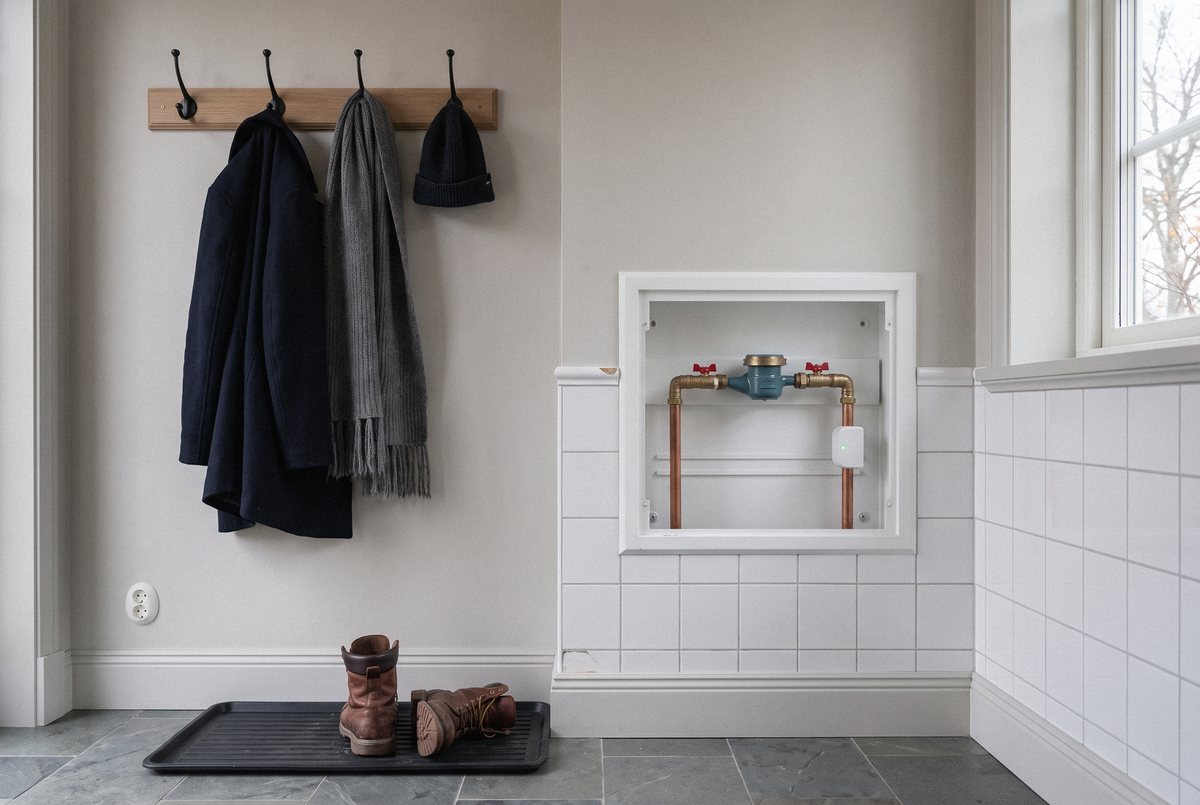
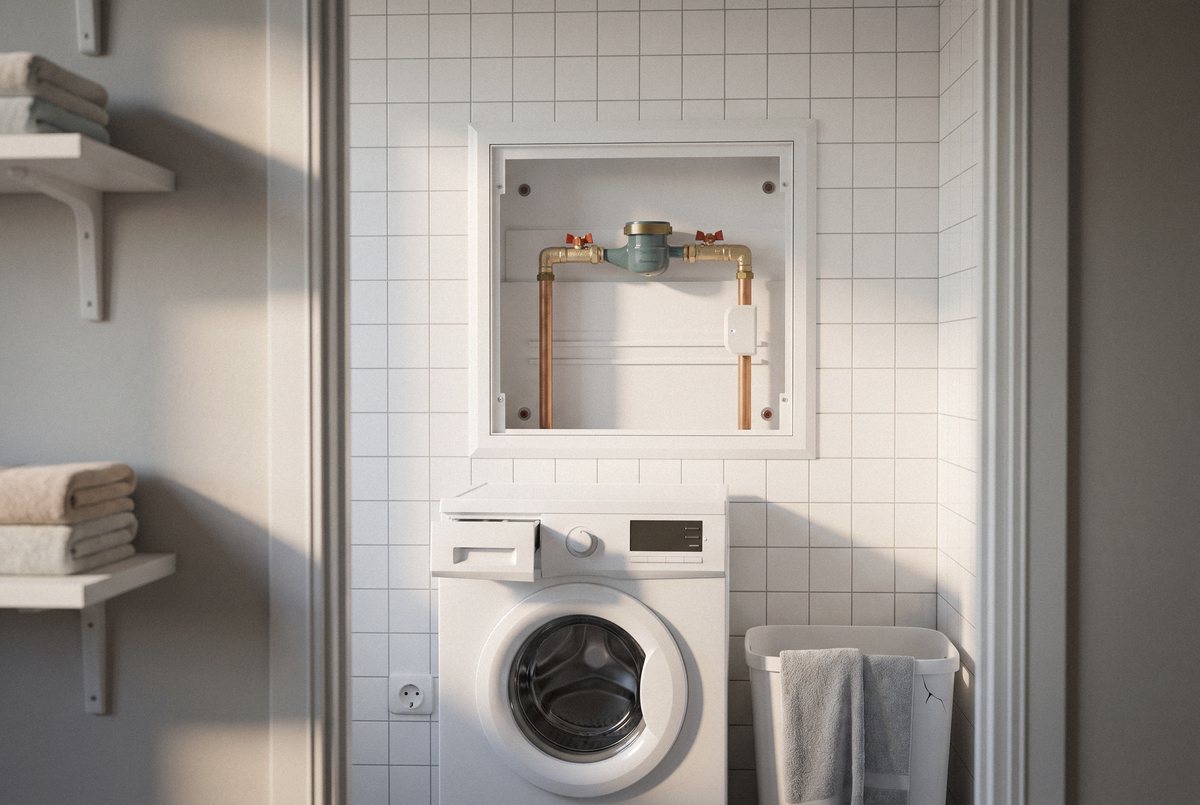
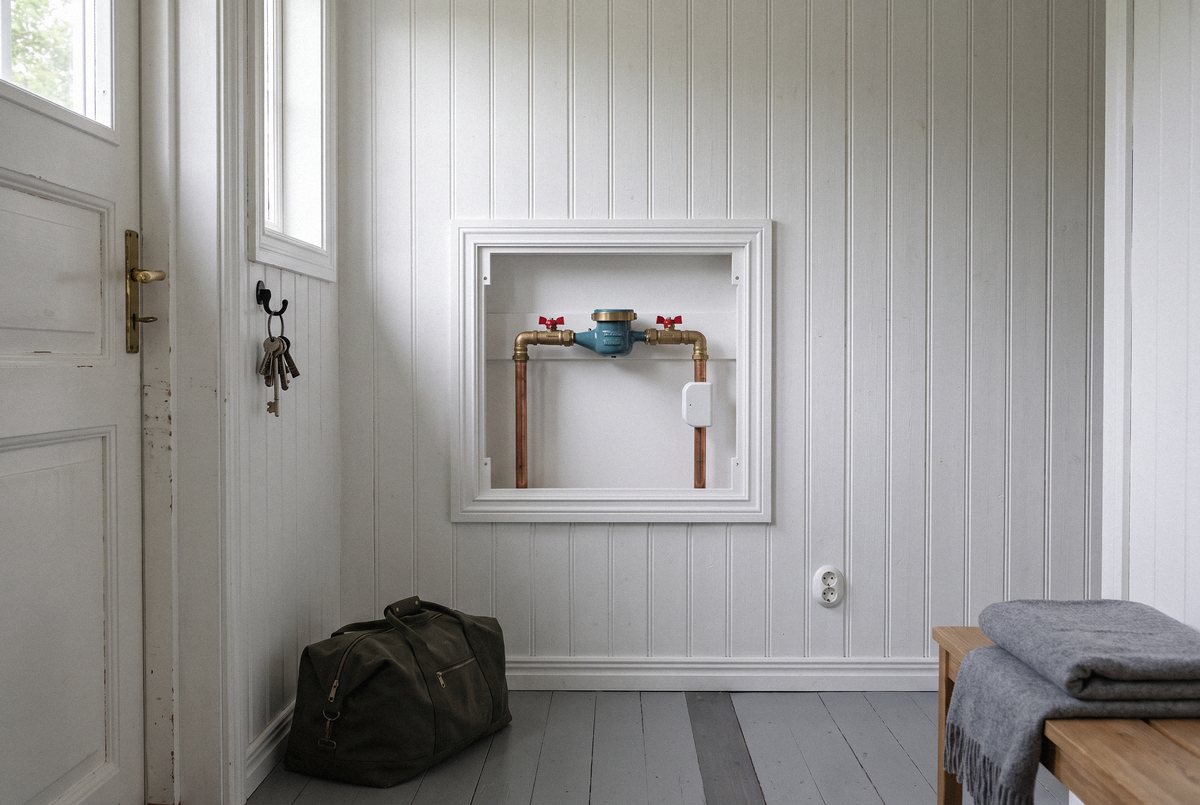
That is why more homeowners are fitting a leak monitor on the mains water pipe. Water Grip sits on the pipe where water enters the home, measures the flow continuously and sends an alarm to the app as soon as it sees unusual flow.
Since September 2026 it also includes a freeze warning. When the temperature at the pipe where the device is mounted drops to 4 degrees Celsius, you get an alert in the app. That gives you time to turn up the heating, open a cupboard door or let a tap drip before the water has a chance to freeze.
If a pipe does split when it thaws, the monitor reacts to the unusual flow and sends an alarm, so you can turn off the stopcock within minutes. The difference between a puddle on the floor and a full insurance claim often comes down to those minutes.
Your winter checklist
Save this list and run through it before the first proper cold spell:
- Lagging in place in the garage, underfloor space, loft and on pipes against outside walls
- Outdoor taps drained and hoses disconnected
- Background heating on in every room with pipework, including the holiday home
- Cupboard doors open against outside walls during a cold snap
- Stopcock located and tested
- Hairdryer and towels ready in case something freezes
- A leak monitor with a freeze warning on the mains pipe if you want an extra layer of protection
A little preparation in autumn saves you the worst kind of surprise in spring.
Read next: The most common causes of water damage at home and What to do in the first hour after a water leak.

Hinterlasse einen Kommentar
Diese Website ist durch hCaptcha geschützt und es gelten die allgemeinen Geschäftsbedingungen und Datenschutzbestimmungen von hCaptcha.